SB 4-D milestone inspections
and the ground beneath them
Florida's SB 4-D, enacted after the Surfside collapse, made periodic structural inspections mandatory for older multi-story condominium buildings. The statute is about the structure. But structures respond to the ground they stand on — and the recent history of that ground is now cheap to read.
What the law requires — in brief
Florida enacted the milestone inspection regime in May 2022 and refined it with later legislation. Condominium and cooperative buildings three stories or higher must undergo a structural inspection by a licensed engineer or architect at 30 years of age — earlier in some coastal jurisdictions — and every ten years after that. Associations must also complete structural integrity reserve studies, so that maintenance is funded, not deferred. This page is orientation, not legal advice — the statute and your association's counsel govern.
The regime normalized something that was rare before Surfside: payment for proactive examination of existing buildings. The shift is bigger than the letter of the statute. Engineers who perform milestone inspections, and the associations that engage them, now routinely ask for evidence that targets the inspection.
Where ground movement history fits
A milestone inspection examines the structure at one point in time. A satellite movement history adds the time dimension for the ground and the stable surfaces of the structure. Did the footprint sink? Is the movement uniform or differential? Did the trend change? The record comes from the public Sentinel-1 radar archive, back to 2015, with no site access.
- — For the inspecting engineer: screening context that helps decide where to look harder — differential settlement history is a targeting signal, not a verdict.
- — For associations and managers with portfolios: triage for many buildings at hundreds of dollars each, before you allocate five-figure engineering budgets.
- — For buyers of units in older coastal buildings: the same due-diligence layer, at parcel scale.
The boundary matters most here: screening-grade radar evidence is not a milestone inspection. It satisfies no statutory obligation, and it never substitutes for the licensed engineer's examination. It is an input the engineer can weigh — dated, with its processing record attached, and priced so the check is never the step that gets skipped.
The deliverable
The report your client sees
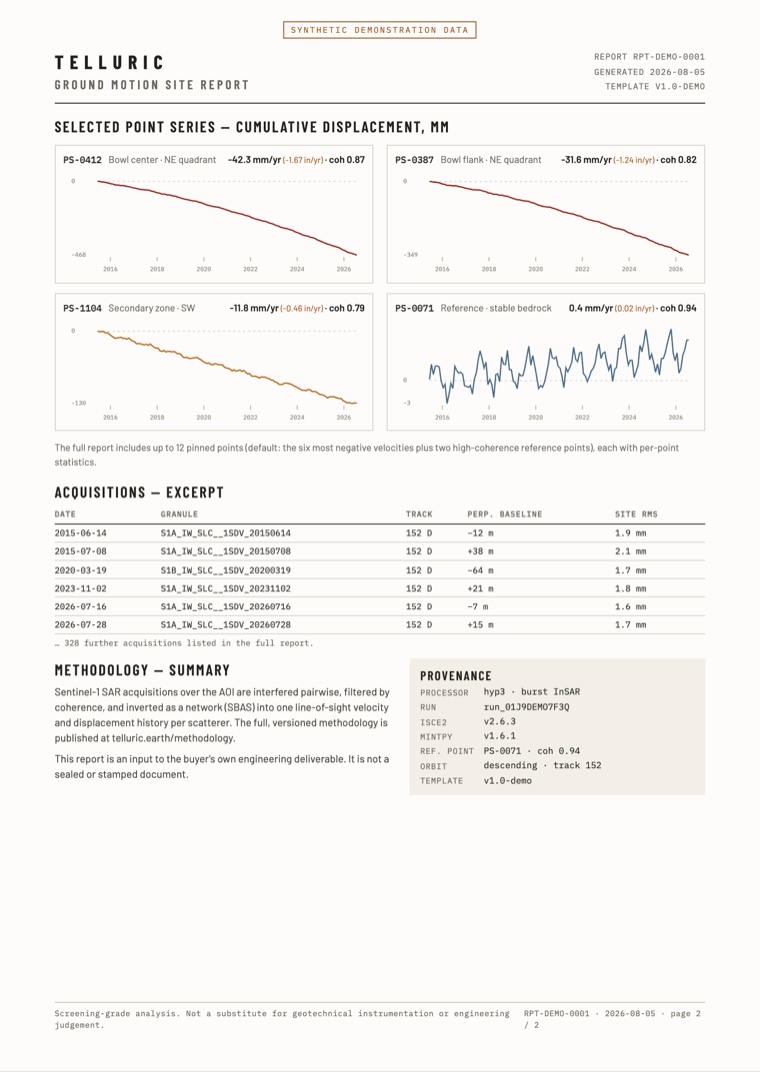
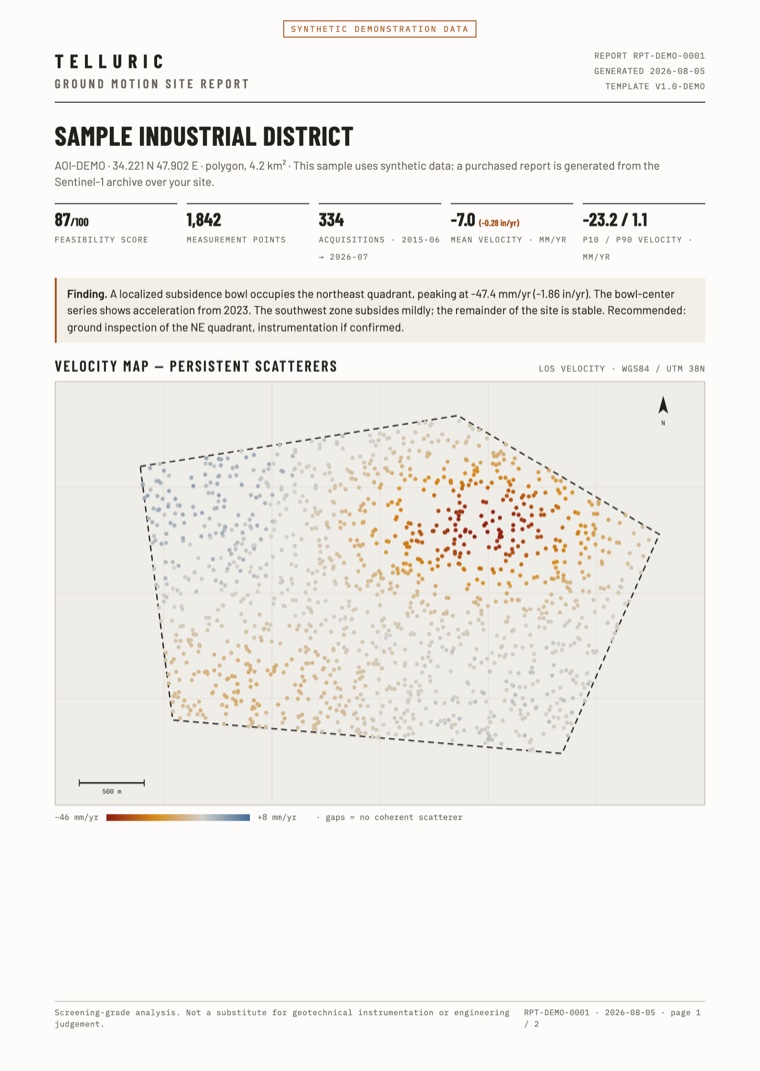
The velocity map, the movement history of each selected point, the list of satellite passes, and the processing record. Use it as an input to your own stamped deliverable.
PDF · two pages · synthetic demonstration data
Check a building's ground history
Draw your site, and you get a free feasibility report from the Sentinel-1 radar archive in about one minute. It tells you how many passes cover the site, how often, over what period — and if the satellites can measure it at all. If they cannot, the report says so.
Check your site freeTelluric readings come from satellite radar and are screening-grade: use them to decide where to inspect. They do not replace geotechnical instrumentation or engineering judgment. Read the methodology.